Gas Leak Detection for Midstream Oil & Gas
Help Transmission System Operators cut fugitive methane emissions — with acoustic cameras that detect any gas, anywhere along the network.
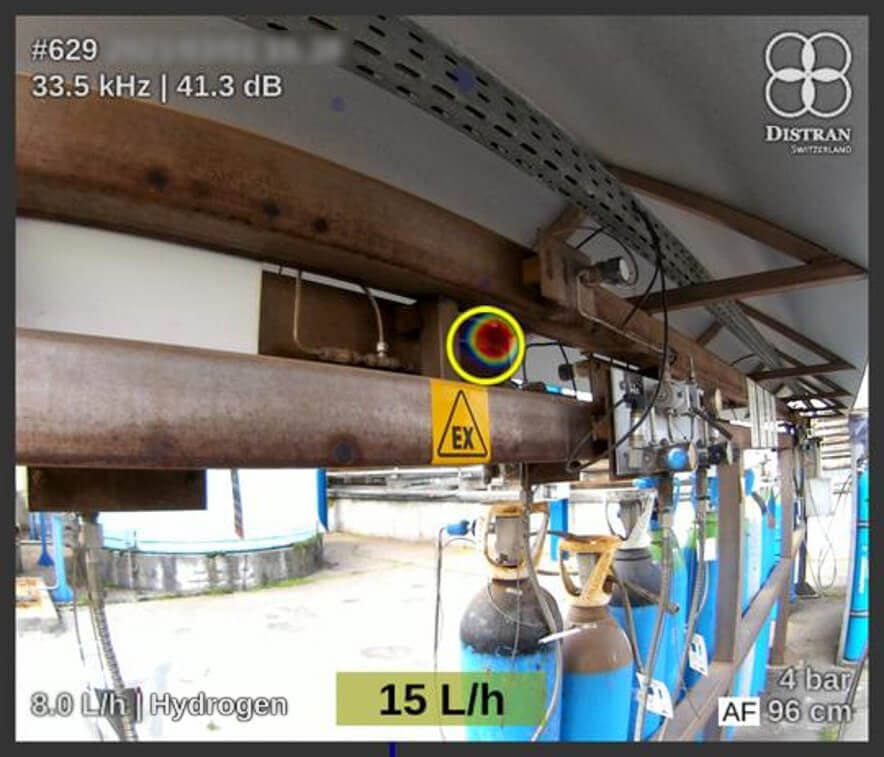
Midstream operations: reducing fugitive emissions across the network
Midstream companies operate pipelines and transmission facilities to move and distribute oil and gas from production sites to refineries and end users. LNG processing terminals, compressor stations, pressure-reducing substations, and storage sites all present dense networks of equipment where even small fugitive emissions add up.
Tightening EU methane regulations and growing LDAR programme requirements make systematic leak detection a business necessity — not just an HSE best practice. Distran acoustic cameras give Transmission System Operators (TSOs) the ability to survey large sites rapidly, detect leaks of any gas type, quantify leak rates in real time, and produce the documentation required for regulatory compliance.
Real-time leak rate quantification lets teams prioritize repairs by ecological impact — directly supporting LDAR compliance and new EU methane emission regulations.
Acoustic Leak Imaging works on methane, natural gas, compressed air, nitrogen, hydrogen, and any other pressurized gas — unlike OGI cameras that are limited to hydrocarbons.
Survey pipelines, flanges, and valves from 0.3 to 100 m — without approaching pressurized equipment or entering restricted zones.
A single operator with an acoustic camera covers far more ground than traditional sniffers or soap spray — reducing survey time from days to hours.
Audalytics captures leak rates, images, and video for every finding — enabling structured LDAR reports, asset tracking, and defensible regulatory submissions.
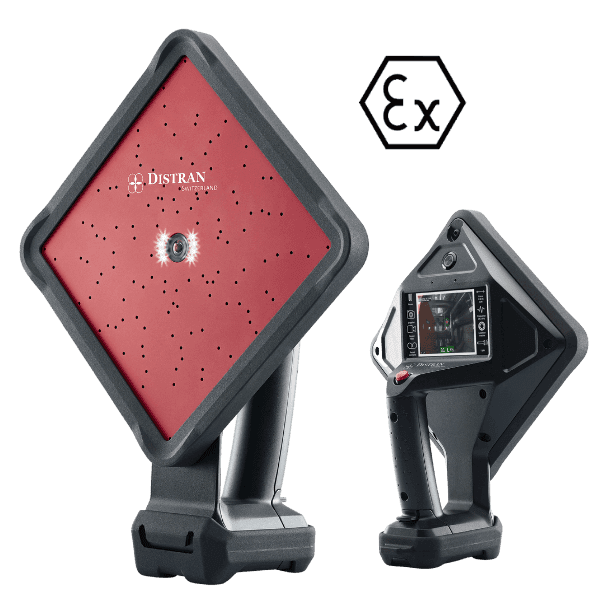
Intrinsically safe Ultra Pro versions are approved for use in potentially explosive environments, including Zone 1/2 and IIC gas groups.
Pipelines, Compressor Stations, and LNG Terminals
Midstream infrastructure spans vast distances and includes diverse equipment types: flanges and valves along transmission pipelines, pressure-reducing substations, interconnection stations, compressor stations, storage sites, and cryogenic systems at LNG terminals.
Transmission System Operators typically deploy Distran cameras alongside other detection methods. Acoustic cameras fill the gap where OGI cameras fall short — detecting leaks of non-hydrocarbon gases such as air and nitrogen, inspecting equipment rooms and enclosed spaces, and quantifying emission rates to support prioritized repair scheduling.
The ability to detect and quantify leaks of all gas types in a single pass — and generate audit-ready reports on the spot — makes acoustic cameras a cornerstone of any compliant LDAR programme.
What operators say about Distran
"Distran makes it possible to significantly expand the spectrum of leakage identification. This can be a key factor on the way to a safe production facility." — Daniel Blambeck, Team Lead Planning - Plant Engineer, Shell Energy and Chemicals Park Rheinland
"Inspections are carried out remotely, easily, quickly, and, above all, safely. The Ultra Pro X has become an indispensable tool." — Vincent Leleux, Deputy Head of Operations, TotalEnergies Feyzin, France